
By :- A.L. Farah Aboud Salih
College of Education for Pure Sciences Department of Mathematics

In recent decades, the world has witnessed radical changes as a result of the digital revolution, which is directly reflected in education systems and technologies. In this context, the concept of smart classrooms has emerged as one of the most prominent features of educational technology, in which there is a more interactive and effective learning experience. These classrooms have become a key element in the fourth quadrant of comprehensive development, especially in business development, because of their ability to support advanced, flexible, and inclusive environments
https://youtu.be/7V8oFI4GYMY?si=QhfUIu6g5vS09n94
Firstly: Definition of Smart Classrooms
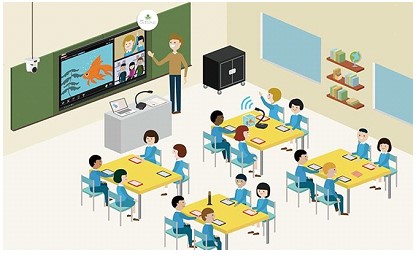
Smart classrooms are learning environments that rely mainly on digital technology to facilitate the learning process. They utilise tools such as:
⦁ interactive smart screens
⦁ computers and tablets
⦁ high-speed internet
⦁ digital learning management systems
⦁ virtual and augmented reality tools
⦁ artificial intelligence and adaptive learning
These classes aim to enhance student interaction with the content and teacher, achieve more efficient and quality learning outcomes, and facilitate access to knowledge anytime, anywhere.
Secondly: The concept of sustainable development and the role of education
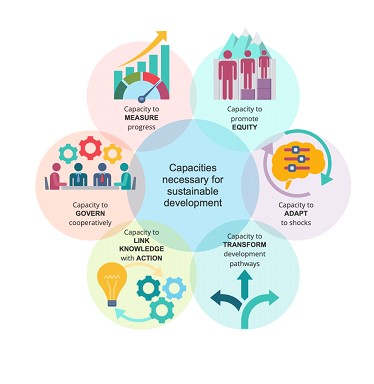
Social development is a partnership that aims to balance economic growth, environmental conservation, and social justice, including meeting basic needs without compromising the ability of future generations to meet their own needs. Education has a pivotal role in achieving these goals, as it contributes to:
⦁ Promote environmental and social awareness
⦁ Support the values of global citizenship
⦁ Empower individuals with the necessary skills to meet the challenges of the future
⦁ Disseminate knowledge that leads to sustainable behaviors
III: The relationship between smart classrooms and educational technology
Smart classrooms are a direct result of the development of educational technology, a field that is concerned with the employment of technology to improve the quality and facilitation of education. This includes:
⦁ Using educational software
⦁ Online assessment systems
⦁ Analysing educational data to personalise learning
⦁ Blended learning
⦁ Creating open educational resources
IV: How do smart classrooms support the Sustainable Development Goals?
⦁ Improving the quality of education
⦁ Deliver interactive education that takes into account different learning styles
⦁ Provide permanent and accessible digital content
⦁ Facilitate access to distance education
⦁ Support self-directed and continuous learning
⦁ Saving the environment
⦁ Reduce paper consumption
⦁ Minimise educational waste
⦁ Reduce schools’ carbon footprint
⦁ Promoting equity and equality of opportunity
⦁ Personalising content for each student
⦁ Engaging those with special needs and disadvantaged groups Fifth: Challenges facing the implementation of smart classrooms
⦁ Lack of technological infrastructure
⦁ Poor teacher training
⦁ High initial costs
⦁ Privacy and information security issues
VI: Recommendations to strengthen the relationship between smart classrooms and sustainable development
⦁ Prepare national plans to expand the use of smart classrooms
⦁ Train teachers on digital learning
⦁ Involve the private sector in funding
⦁ Develop comprehensive digital content
⦁ Ensure inclusiveness of smart education Conclusion
Smart classrooms are a bridge between technology on the one hand, and its application on the other. It does not necessarily involve modernising educational tools, but actually building a more conscious, inclusive, and expansive future. Adopting this type of education is not a luxury, but an investment in people and society, which has become one of the most important contributors to social development in the twentieth century
References:
⦁ For the sake of development: The Roadmap, (2022) United Nations Educational, Scientific and Cultural Organisation, UNESCO.
⦁ Instructions for Smart Classrooms in Public Education, Saudi Ministry of Education. (2022)
⦁ Ahmed, Mohammed. (2021). Educational technology and its impact on improving educational outcomes. Third edition
⦁ Al-Azzawi, A., Cirinelli, F., and Lundqvist, K. The Future of Jobs (2017) Journal of the
World Economic Forum, Issue