
Asst. Prof. Dr. Israa Naser Ghulam
College of Education for Pure Sciences – Department of biology
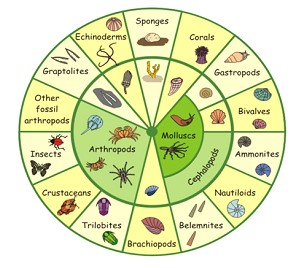
Recently, there has been much talk about environmental sustainability and ways to preserve biodiversity and ecosystems. Invertebrate diversity has emerged as a key focus, one whose role is often overlooked. These organisms constitute an invaluable natural wealth. They are a virgin world that has not been accurately accessed and whose reality has not yet been discovered. In addition to the central roles they play in supporting ecosystems and serving humans and the environment, invertebrate diversity represents all animals that do not have a backbone, such as insects, spiders, mollusks, crustaceans, and worms.

These organisms regulate interactions between organisms in environmental habitats. They are either predators, decomposers of the remains of other organisms, or pollinators of plants or other animals, directly or indirectly. They maintain the balance of ecosystems, and some contribute to the sustainability of agriculture through their work in aerating and turning over the soil and analyzing organic materials, and thus the benefits of these processes for plants and their growth, as in the case of worms and some types of insects. Some invertebrates can also be relied upon as environmental indicators that indicate the quality of water, soil, and air, through which pollution and its source can be understood.
For all of the above, it is necessary to pay attention to this natural wealth, not just to pay attention to preserving it and promoting its growth, because it contributes to building complete ecosystems on which humans depend, and any imbalance in it is considered An imbalance in the natural balance of the environment, providing natural reserves for such small creatures or making attempts to reduce their extinction due to the environmental climate or even human intervention and expansion, Now, in light of the current circumstances and technological advancement, invertebrates, their forms and types, can be employed in the service of sustainability. For example, some invertebrates have been used in the manufacture of bioplastics or some of its stages. Some types of insects or arthropods can be used in biological control, thus reducing chemical pollution of the environment and reducing the impact of the use of polluting pesticides and their damage to crops and animals alike , We cannot ignore the research aspect of using some invertebrates and studying them, their life cycles and forms in scientific and academic forums based on experimentation and analysis to devise and discover new methods and means that benefit the environment and environmental sustainability and thus preserve biodiversity on this planet.
This link includes a simple introduction to Invertebrate diversity.
https://youtu.be/vOkbwhTBAGc?si=r331H_0Vwpqk7pzo
References:
[1] Chapman, A.D. (2009). Numbers of Living Species in Australia and the World.
[ 2] Lavelle, P. et al. (1997). Soil function in a changing world.
[3] Rosenberg, D.M. et al. (1986). Importance of insects in environmental impact assessment.
[4] Cardoso, P. et al. (2020). Scientists’ warning to humanity on insect extinctio.
[5]https://spskills.com/articles/%D8%A7%D9%84%D8%A7%D8%B3%D8%AA%D8%AF%D8%A7%D9%85%D8%A9-%D8%A7%D9%84%D8%A8%D9%8A%D8%A6%D9%8A%D8%A9-%D9%85%D8%A7-%D9%87%D9%8A-%D9%88%D9%83%D9%8A%D9%81%D9%8A%D8%A9-%D8%AA%D8%B7%D8%A8%D9%8A%D9%82%D9%87/