

Prof. Dr. Ban Taha Mohammad
Biology Department / College of Education for Pure Sciences / University of Karbala
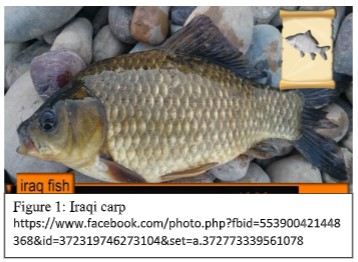
Fish resources in Iraq are an important economic pillar that contributes to achieving food security and providing sources of income for farmers and fishermen, especially in rural areas [1].The Tigris and Euphrates rivers, in addition to a number of natural and artificial lakes (such as Lake Tharthar and Lake Razzaza), provide a fertile environment for fish farming, especially common carp (Cyprinus carpio), which represents the largest proportion of local fish production [2], [3] .
Despite the availability of appropriate natural resources, this sector suffers from a number of challenges, the most prominent of which are environmental and health, most notably infectious diseases, especially fungal diseases that spread in intensive farming systems, which are often accompanied by poor environmental conditions, such as high concentrations of ammonia, lack of dissolved oxygen, and poor water management] 4. [Among these diseases, infections with the fungus Saprolegnia spp. are of particular importance, as they cause direct and indirect economic losses exceeding millions of dollars annually worldwide, and local and international reports have begun to document its spread in Iraq during the last two decades [5].

Saprolegnia fungi are members of the Oomycetes order belonging to the kingdom Straminipila and are characterized by their undivided mycelium and asexual reproduction by zoospores. This makes it rapidly spread in freshwater. A gray or white cottony growth often appears on the surface of the body of infected fish or their eggs, especially in cases of wounds or immune stress. The disease caused by this fungus is a secondary disease, exploiting the presence of primary causes such as parasites or a poor aquarium environment [6].

Infections worsen and seasonal fungal epidemics recur, especially during the colder seasons. With the absence of effective veterinary control programs for fish diseases in Iraq and the weak infrastructure for early diagnosis, farmers’ reliance on banned chemical treatments such as malachite green without supervision leads to health problems for consumers, in addition to its impact on the aquatic environment and non-target organisms.[7],[8].
This article comes in the context of the growing need for a broader and more accurate understanding of the impact of the Saprolegnia fungus on fish stocks in Iraq, while exploring possible sustainable methods for prevention and control. Recognizing the risks of traditionally used chemical pesticides (such as malachite green), new strategies for Saprolegnia control have been developed that focus on sustainable environmental and overall fish health. Prominent among these approaches are:
Hydrogen peroxide treatment
H₂O₂ is an environmentally friendly and relatively safe substance. Several studies have shown its effectiveness in reducing infection rates when used at moderate concentrations (50–100 mg/L). It also rapidly decomposes into water and oxygen, leaving no toxic traces in the water] 9[.
Nanotechnology applications
Nanoparticles, such as ZnO and AgNPs, have proven highly effective as antifungals, affecting the cell membrane of fungi and inhibiting their growth. Recent studies in Iraq and Egypt have successfully used bio-manufactured ZnO nanoparticles from plant extracts to combat Saprolegnia without toxic effects on fish] 10. [
Immune food additives(Synbiotics):
Supplements containing probiotics (such as Lactobacillus and Bacillus subtilis) and prebiotics (such as inulin) strengthen the immune system of fish and reduce skin infections caused by fungi. The Food and Agriculture Organization (FAO) recommends integrating these strategies into sustainable aquaculture management ] 11].
Use of natural plant extracts
It was found that some plant extracts such as garlic, ginger, and jujube, when used in appropriate concentrations in pond water or in fish feed, have antifungal properties and enhance natural immunity without any significant side effects [12].
Recommendations:
• Support local research projects to develop environmentally friendly pest control methods.
• Organize awareness campaigns for small farmers on prevention and early diagnosis.
• Emphasize the prohibition of the use of harmful pesticides and the adoption of safe alternatives.
• Establish veterinary laboratories specializing in monitoring aquatic fungi in each governorate.
References:
[1] M. Harlıoğlu, S. O. M. Mustafa, and Z. Batool, “The present situation of the fisheries sector in Iraq: a critical review,” Çanakkale Onsekiz Mart Univ. J. Mar. Sci. Fish., vol. 6, no. 1, pp. 70–75, 2023.
[2] H. R. Esmaeili, “Exotic and invasive freshwater fishes in the Tigris-Euphrates River system,” Tigris Euphrates Rivers Their Environ. from Headwaters to Mouth, pp. 1103–1140, 2021.
[3] L. A. Jawad, M. S. Faddagh Ziyadi, and A. J. Al-Faisal, “The Common Carp, Cyprinus carpio: Effect on the Environment and the Indigenous Fish Species in Iraq,” Tigris Euphrates Rivers Their Environ. from Headwaters to Mouth, pp. 877–896, 2021.
[4] E. C. D. Todd, “Waterborne diseases and wastewater treatment in Iraq,” J. Food Prot., vol. 87, no. 1, p. 100204, 2024.
[5] M. A. A. Muataz and K. A. Majid, “The spreading and molecular characterization of the fungus Saprolegnia parasitica in the water of Al-Diwaniyah river of Iraq,” Online J. Anim. Feed Res, vol. 12, no. 4, pp. 194–199, 2022.
[6] F. F. Ali, S. K. Al-Taee, and Z. M. Al-Jumaa, “Isolation, molecular identification, and pathological lesions of Saprolegnia spp. isolated from common carp, Cyprinus carpio in floating cages in Mosul, Iraq,” Vet. World, vol. 13, no. 12, pp. 2759–2764, 2020, doi: 10.14202/vetworld.2020.2759-2764.
[7] M. S. Qadir, H. S. Salem, T. K. Jalal, and S. M. Mohammed, “Aquatic Fungi and Fungal Diseases of Fish: A Review,” in Proceedings of the Zoological Society, Springer, 2024, pp. 1–13.
[8] J. He, P. Mo, Y.-S. Luo, and P.-H. Yang, “Strategies for solving the issue of malachite green residues in aquatic products: a review,” Aquac. Res., vol. 2023, no. 1, p. 8578570, 2023.
[9] M. P. Gaikowski et al., “Efficacy of hydrogen peroxide in controlling mortality associated with saprolegniasis on walleye, white sucker, and paddlefish eggs,” N. Am. J. Aquac., vol. 65, no. 4, pp. 349–355, 2003.
[10] R. H. H. Al-Shammari, M. H. M. Alsaady, and S. S. M. Ali, “The efficiency of biosynthesized zinc oxide nanoparticles by Fusarium sp. against Saprolegnia parasitica isolated from common carp eggs in fish hatchery,” Int. J. Aquat. Biol., vol. 10, no. 5, pp. 378–383, 2022.
[11] E. Amenyogbe et al., “Impact of probiotics, prebiotics, and synbiotics on digestive enzymes, oxidative stress, and antioxidant defense in fish farming: current insights and future perspectives,” Front. Mar. Sci., vol. 11, p. 1368436, 2024.
[12] T. Iqbal, U. Salma, M. Umair, H. Iqbal, T. Khalid, and S. Hyder, “Utilizing Medicinal Plants for Disease Treatment in Aquaculture: An Approach to Improve Fish Health: Medicinal Plants in Aquaculture,” MARKHOR (The J. Zool., pp. 3–10, 2024.