

Prof. Dr. Ban Taha Mohammad
MSc. Nedal Wahab Hameed
Biology Department / College of Education for Pure Sciences
Agriculture has long been a cornerstone of the global economy. However, with the rapid increase in global population and changing dietary demands, there is an urgent need to meet food security challenges through diversified agricultural strategies[1]. One such strategy is the promotion of secondary agricultural activities, such as mushroom cultivation, which play a crucial role in addressing the growing concerns surrounding food quality, human health, and environmental sustainability [2].Mushrooms are increasingly recognized as a key component of future diets due to their rich nutritional profile and health-promoting properties[3]. Consumer interest in edible mushrooms has grown significantly in recent years, largely driven by their functional food potential and therapeutic applications [4] . Button mushroom,it is the most widely cultivated mushroom species globally [5]. Taxonomically, it belongs to the phylum Basidiomycota, class Agaricomycetes, order Agaricales, and family Agaricaceae[6]. Native to Europe and North America, A. bisporus accounts for approximately 35–45% of all edible mushroom production worldwide [7]( Fig 1 ) .

Figure 1 : Agaricus Bisporus https://www.mushroomexpert.com/images/kuo6/agaricus_bisporus_04.jpg
The fruiting bodies of A. bisporus have been scientifically validated for their beneficial effects on human health, effects that often surpass those expected from their basic nutritional content [8]. Based on its chemical composition, A. bisporus is considered a valuable source of bioactive and nutritional compounds that contribute to the growth, development, and maintenance of vital physiological functions in the human body[9].Agaricus bisporus is primarily available to consumers through commercial cultivation and is widely appreciated for its distinctive taste and aroma[10]. However, its true value lies in its rich nutritional content and medicinal properties, which stem from its complex profile of metabolic and bioactive compounds[11]. This mushroom is an excellent source of dietary fiber, essential and semi-essential amino acids, and antioxidants such as sterols, phenolic compounds, indole derivatives, ergothioneine, vitamins, and selenium [12].
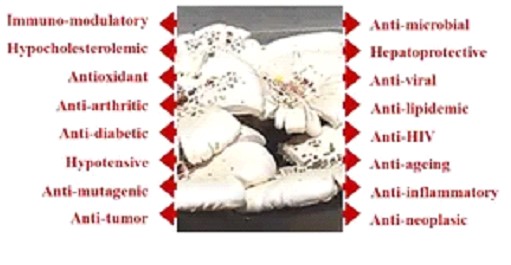
Figure 2. Multiple roles of mushrooms in several dysfunctions and health concerns.
https://www.frontiersin.org/journals/nutrition/articles/10.3389/fnut.2022.1050099/full
The amino acid profile of A. bisporus has been extensively studied, revealing the presence of eighteen different amino acids. Although not all of these amino acids are present in concentrations high enough to qualify the mushroom as a complete nutritional supplement, several are found in substantial amounts[13]. The most abundant amino acids include aspartic acid, leucine, arginine, glutamic acid, serine, phenylalanine, lysine, tyrosine, proline, and threonine [14]. While A. bisporus contains several amino acids in high concentrations, others such as cysteine, methionine, and valine are found in relatively low amounts [15] . The fruiting bodies of A. bisporus are widely known for a range of bioactivities, including anticancer, antitumor, antioxidant, antimicrobial, anti-inflammatory, cholesterol-lowering, and immunostimulant properties [16].These health benefits are largely attributed to its rich composition of biologically active compounds [17]. One notable compound is arginine, a semi-essential amino acid present in the mushroom’s fruiting bodies. Arginine has been included in nutritional supplements for cancer patients due to its role in delaying tumor growth and metastasis, boosting immune response, enhancing body mass, and improving survival rates
[18]. The global demand for sustainable and nutritious food has positioned Agaricus bisporus as a key agricultural resource. Its high nutritional value, medicinal benefits, and low environmental impact make it ideal for sustainable food systems. The mushroom’s antimicrobial and antioxidant properties, along with its role in nanotechnology, enhance its value. Cultivating A. bisporus supports food security and rural development while reducing ecological footprints. Thus, it contributes meaningfully to achieving several UN Sustainable Development Goals.
This link includes a simple introduction to Agaricus bisporus Mushroom
https://www.youtube.com/watch?v=E81SveuJNSc
References:
[1] K. Waha et al., “Agricultural diversification as an important strategy for achieving food security in Africa,” Glob. Chang. Biol., vol. 24, no. 8, pp. 3390–3400, 2018.
[2] S. Jayaraman et al., “Mushroom farming: A review Focusing on soil health, nutritional security and environmental sustainability,” Farming Syst., vol. 2, no. 3, p. 100098, 2024.
[3] V. Bell, C. Silva, J. Guina, and T. H. Fernandes, “Mushrooms as future generation healthy foods,” Front. Nutr., vol. 9, p. 1050099, 2022.
[4] P. Łysakowska, A. Sobota, and A. Wirkijowska, “Consumer interest in edible mushrooms has grown significantly in recent years, largely driven by their functional food potential and therapeutic applications,” Molecules, vol. 28, no. 14, p. 5393, 2023.
[5] Z. El-Sebaaly, M. Hammoud, and Y. N. Sassine, “History, health benefits, market, and production status of button mushroom.,” in Mushrooms: Agaricus bisporus, CABI Wallingford UK, 2021, pp. 1–65.
[6] J. Kalichman, P. M. Kirk, and P. B. Matheny, “A compendium of generic names of agarics and Agaricales,” Taxon, vol. 69, no. 3, pp. 425–447, 2020.
[7] H. M. Waqas et al., “Identification of natural antifungal constituents from Agaricus bisporus (JE Lange) Imbach.,” Appl. Ecol. Environ. Res., vol. 16, no. 6, 2018.
[8] B. Muszyńska, K. Kała, J. Rojowski, A. Grzywacz-Kisielewska, and W. Opoka, “Composition and biological properties of Agaricus bisporus fruiting bodies: a review,” 2017.
[9] R. Krishnamoorthi, M. Srinivash, P. U. Mahalingam, and B. Malaikozhundan, “Dietary nutrients in edible mushroom, Agaricus bisporus and their radical scavenging, antibacterial, and antifungal effects,” Process Biochem., vol. 121, pp. 10–17, 2022.
[10] M. Usman, G. Murtaza, and A. Ditta, “Nutritional, medicinal, and cosmetic value of bioactive compounds in button mushroom (Agaricus bisporus): a review,” Appl. Sci., vol. 11, no. 13, p. 5943, 2021.
[11] A. Bhambri, M. Srivastava, V. G. Mahale, S. Mahale, and S. K. Karn, “Mushrooms as potential sources of active metabolites and medicines,” Front. Microbiol., vol. 13, p. 837266, 2022.
[12] J. Kaur et al., “Edible mushrooms: a source of quality protein,” in Wild Mushrooms, CRC Press, 2022, pp. 169–192.
[13] P. Mattila, P. Salo-Väänänen, K. Könkö, H. Aro, and T. Jalava, “Basic composition and amino acid contents of mushrooms cultivated in Finland,” J. Agric. Food Chem., vol. 50, no. 22, pp. 6419–6422, 2002.
[14] H. Kopylchuk, O. Voloshchuk, M. Pasailiuk, and N. Fontana, “Comparison of total amino acid composition and total protein content in five wild mushrooms,” Ital. J. Mycol., vol. 54, pp. 64–76, 2025.
[15] X. Ma et al., “Enhancing Postharvest Quality of Fresh-Cut Changgen Mushrooms by Exogenous L-Cysteine Treatment: Aspects of Accumulating Amino Acids, Triggering Energy Metabolism and Enhancing Endogenous H2S Regulation,” Foods, vol. 14, no. 3, p. 496, 2025.
[16] P. Ray, S. Kundu, and D. Paul, “Exploring the therapeutic properties of Chinese mushrooms with a focus on their anti-cancer effects: a systemic review,” Pharmacol. Res. Chinese Med., p. 100433, 2024.
[17] K. Kumar et al., “Edible mushrooms: A comprehensive review on bioactive compounds with health benefits and processing aspects,” Foods, vol. 10, no. 12, p. 2996, 2021.
[18] R. Sindhu, M. Supreeth, S. K. Prasad, and M. Thanmaya, “Shuttle between arginine and lysine: influence on cancer immunonutrition,” Amino Acids, vol. 55, no. 11, pp. 1461–1473, 2023.